Loading two cabin suitcases and a stroller into a compact sedan’s trunk is the test that most buyers mentally perform before signing. On the third-generation Peugeot 308, the result heavily depends on the chosen engine, and this point often goes under the radar.
308 Sedan Trunk: Volume Varies by Engine
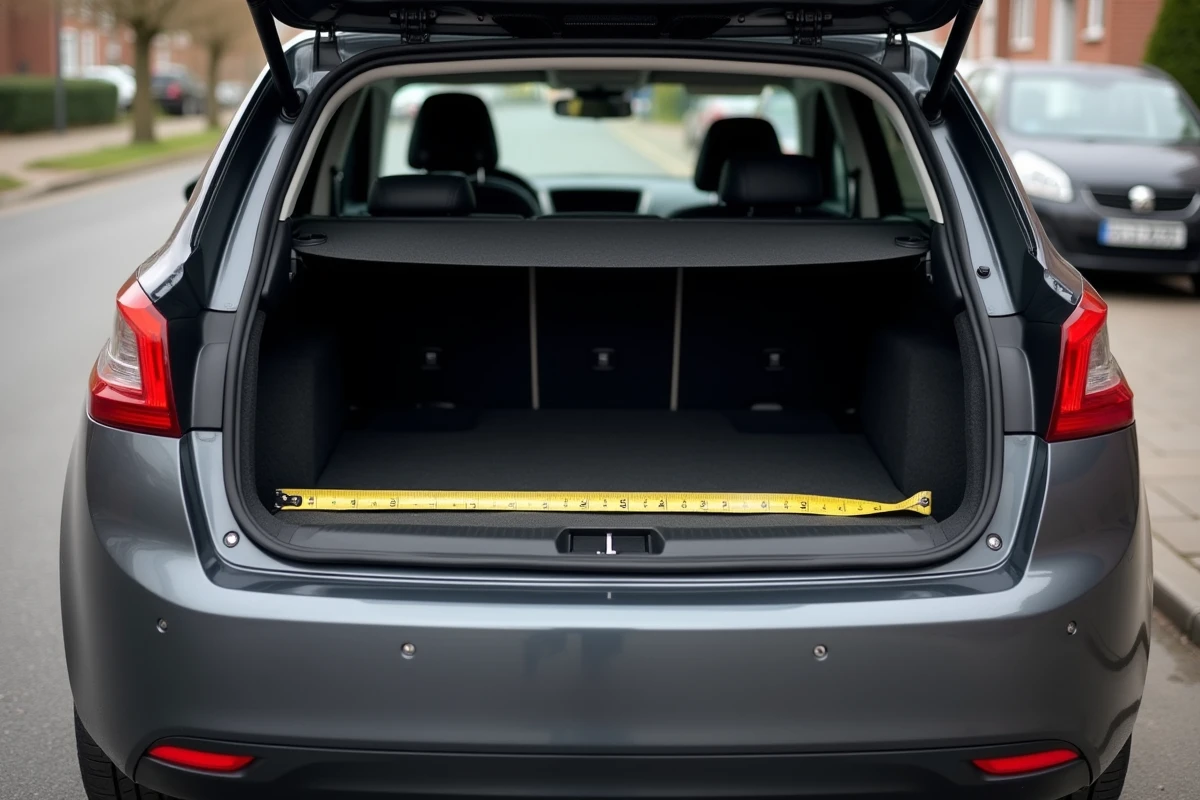
Did you spot the figure of 412 liters on a technical sheet? It corresponds to the thermal and mild hybrid versions of the 308 III. This volume is measured under the shelf, in a five-seat configuration.
Switch to the plug-in hybrid, and this figure drops to 314 liters on the 308 PHEV. The 14.6 kWh usable battery, located under the floor, cuts nearly a quarter of the loading space. On the electric version (e-308), the volume slightly increases to 361 liters, thanks to a different battery architecture.
In practical terms, 314 liters is enough for a sports bag, a hard cabin suitcase, and some groceries. For those considering the trunk capacities and dimensions of the 308 before a purchase, this difference between engines is worth knowing from the start.

308 SW: The Station Wagon That Relativizes Battery Constraints
The 308 SW in thermal version boasts about 610 liters under the shelf. This is the high reference of the range and a strong argument for families or frequent travelers.
With the plug-in hybrid engine, the trunk capacity drops to 548 liters. The loss is noticeable, but the volume remains usable for two large suitcases and a soft bag. On the electric version, expect 505 liters.
Folding Rear Seat: Gaps Widen
Folding down the 60/40 rear seat transforms the station wagon into an occasional utility vehicle. In thermal versions, the 308 SW reaches about 1,634 liters. On the plug-in hybrid, this total drops to 1,574 liters. The gap may seem modest in percentage, but in practice, it can make a difference when fitting a flat-pack furniture item or a bike without removing the front wheel.
The trunk floor is higher on electrified versions. This elevation sometimes creates a step when the seat is folded down, complicating the sliding of long objects.
VDA Standard and Actual Volume: Why Liters Can Be Misleading
The volumes announced by Peugeot follow the VDA standard. The principle is simple: you fill the trunk with rigid one-liter parallelepipeds and count. This method provides a reproducible figure, but it does not reflect the actual shape of the available space.
A 412-liter VDA trunk does not load like a cube of 412 liters. The sloping walls, wheel arches, and hatch shape reduce the actually usable volume. Two trunks displaying the same VDA volume can offer very different practicality depending on their geometry.
On the 308 sedan, the width between the wheel arches is about one meter. This is sufficient for two hard suitcases side by side. The depth under the shelf allows for stacking soft bags without too much compression. However, the loading threshold, quite high on the sedan, requires lifting heavy objects.
What the VDA Volume Doesn’t Tell You
- The height of the loading threshold influences daily physical effort, especially with heavy groceries or a stroller
- The presence or absence of a double floor modifies modularity: on certain trims of the 308 SW, a storage compartment under the floor accommodates flat items
- The hatch shape on the sedan limits stacking height compared to the station wagon, even with comparable volume when the seats are in place
Trims and Packs: What Modifies the Usable Space of the 308’s Trunk
The gross volume tells only part of the story. Depending on the trim and options, the trunk layout varies.
Versions equipped with the high-end audio system sometimes integrate a subwoofer in the trunk. This subwoofer eats up a few liters and reduces the available flat surface. On entry-level trims, the trunk remains clear, without lateral obstacles.
The rigid shelf provided as standard is removable. Removing it frees up height for bulky items, at the cost of loading discretion. This is a common compromise on compacts, but it’s important to know that the 308’s shelf does not store flat under the floor: it must be stored elsewhere.
60/40 Split Seat: Standard but Effective Modularity
All 308s offer a 60/40 split rear seat. The folding is done from the trunk thanks to handles that are accessible without contortion. The backrest, once folded, creates a slight level difference with the trunk floor on the sedan.
- The 60 part (passenger side) is sufficient for sliding in skis or long objects while keeping a rear seat available
- The 40 part frees up a narrow passage, suitable for boards or rods
- Folding both sides provides an almost flat floor on the SW, less even on the sedan
308 Thermal, Hybrid, or Electric: Which Trunk for Which Use
The choice of engine on the 308 is not just a matter of fuel consumption or budget. It directly affects trunk volume and daily practicality.
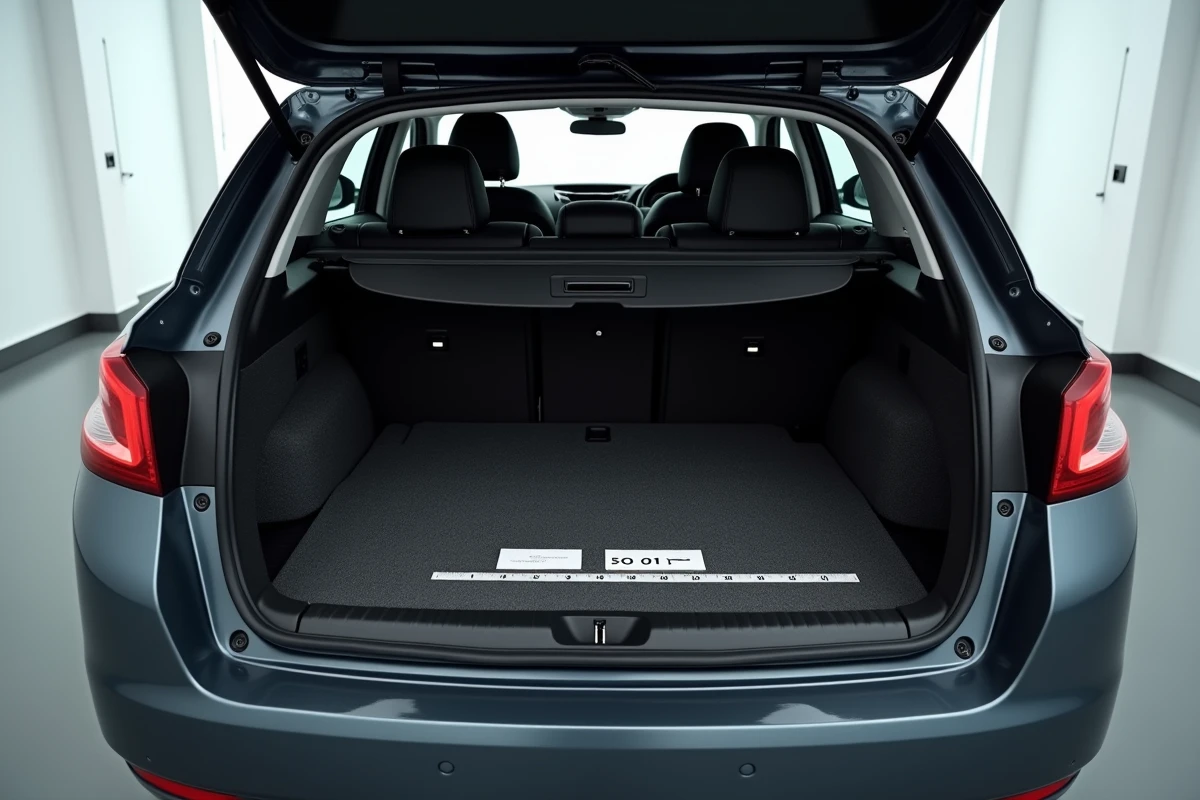
For family use with a stroller, weekly groceries, and vacation luggage, the thermal or mild hybrid version of the sedan (412 liters) covers most needs. The plug-in hybrid, at 314 liters, is better suited for urban use with light loads.
The thermal 308 SW remains the most versatile choice for those who regularly transport bulky equipment. With 610 liters under the shelf and a flat floor when the seats are folded, it rivals some compact SUVs without their ride height.
The new Hybrid 145 and Plug-in Hybrid 195 versions introduced in phase 2 maintain the same battery space constraints. Gaining hybrid power does not restore the lost liters in the trunk. This is a trade-off to be clearly made before ordering.