The color of a gate is not just a matter of taste. It affects the durability of the coating over time, the thermal behavior of the material, and, in some cases, the regulatory compliance of the installation. Choosing the color of your outdoor gate involves considering technical parameters that most decorative guides overlook.
Dark color and thermal constraints on aluminum or steel gates
A black or anthracite gate exposed to full south can reach very high surface temperatures in summer. This rise in temperature accelerates the aging of the paint, causes micro-cracks, and, on a motorized gate, puts additional strain on the actuators or rack motor due to the expansion of the panel.
Manufacturers now offer cool pigment shades for aluminum gates, formulated to reflect a larger portion of infrared radiation. The gain is measurable: under the same exposure, a cool pigment anthracite heats significantly less than a standard anthracite. The risk of deformation or cracking of the paint decreases proportionally.
We recommend these formulations whenever the gate is oriented south or southwest, especially when it is motorized. To find out how to choose the color of a gate while considering these thermal constraints, you first need to identify the exact orientation and the type of motorization installed.
On a long sliding aluminum gate, the linear expansion between winter and mid-summer can be enough to misalign the end-of-travel sensors. A light shade or a cool pigment formulation reduces this gap and extends the lifespan of the motorization.
Powder coating and certification: what the NF EN 12206-1 standard changes for color choice
Since the 2022 revision of the NF EN 12206-1 standard on aluminum powder coating, the Qualicoat and Qualimarine labels have tightened their requirements. Intense colors (saturated reds, deep blues, oranges) and textured finishes undergo enhanced durability tests, particularly for gates installed in polluted urban environments or coastal areas.
In practical terms, a Qualicoat Seaside certified powder-coated aluminum gate retains its appearance much longer than a gate treated outside the label. The additional cost at purchase is offset by the absence of repainting during the gate’s lifespan.
Finish and durability according to the exposure environment
- By the sea (less than 3 km from the coast), only Qualimarine certified ranges guarantee satisfactory resistance to salt mist, regardless of the chosen shade
- In dense urban areas, pollution microparticles attack light matte finishes more, which gray faster than a dark satin
- In low-exposure rural areas, the main constraint remains UV: non-stabilized bright shades (yellow, bright red) fade within a few years without appropriate treatment
The choice of an outdoor gate color should always start with the question of the exposure environment, before considering aesthetics.
PLU, ABF, and local color charts: regulatory constraints on gate color
In heritage municipalities and classified site perimeters, the PLU or the Architect of Buildings of France imposes a color chart of authorized shades. Ocher, grayish greens, and muted browns dominate. Deep black and very saturated colors are systematically refused for any element visible from public space.
This constraint applies even on private property as long as the gate opens onto public roads. We regularly observe owners forced to redo a powder coating at their expense after a non-compliance refusal during post-work inspection.
Checks to perform before ordering
- Consult the PLU regulations of the municipality, under “fences and gates,” to check for the existence of an imposed color chart
- In ABF areas (historic monument perimeter, remarkable heritage site), submit a prior declaration of works with the planned RAL shade
- Check for any prescriptions from the subdivision or condominium, which may restrict the choice to two or three shades
Ignoring these checks exposes you to a formal notice to restore compliance. The cost of re-powder coating or replacing a gate far exceeds that of a simple consultation of the PLU at the town hall.
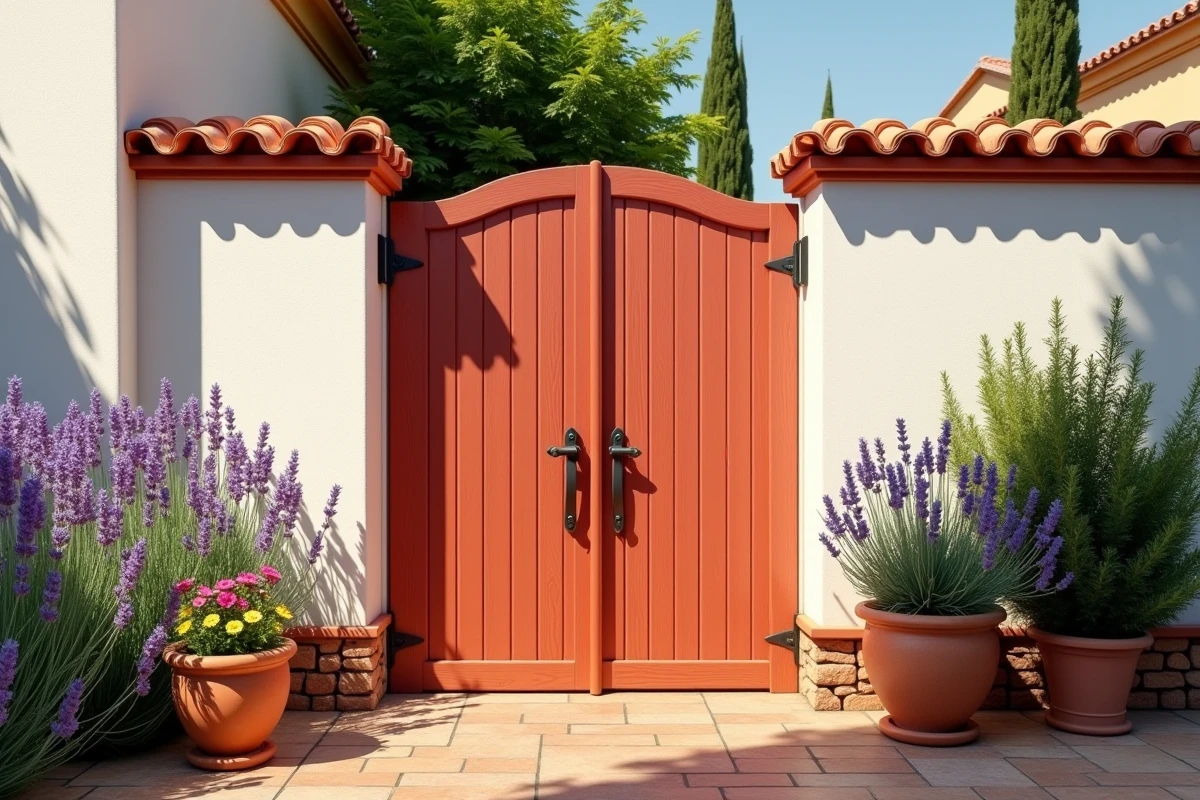
Gate color and maintenance behavior: matte, satin, or glossy
The finish radically changes the perception of color and maintenance frequency. A matte anthracite gray gate hides fingerprints and micro-scratches better than a glossy one, but it retains more fine dust and limescale deposits in hard water areas.
The satin finish represents the best compromise for most installations. It limits chalking (surface degradation of the paint under UV) and can be cleaned with clear water without leaving visible marks. The glossy finish, appealing at installation, reveals every surface defect after a few months of exposure.
On a wooden gate, the question arises differently. Stained or microporous paint allows the material to breathe. Dark shades absorb more heat, which accelerates the drying of the wood and requires more frequent maintenance (every two to three years compared to four to five years for a light stain).
Aluminum gate versus wooden gate: the impact of color on aging
Powder-coated aluminum requires only annual washing. Wood, even treated with autoclave, requires regular maintenance of the finish. The choice of material affects both the durability of the color and the shade itself. A Qualicoat certified anthracite aluminum gate retains its color much longer than a wooden gate painted in the same color.
RAL 7016 anthracite gray dominates sales for both technical and aesthetic reasons: this shade offers a good balance between moderate thermal absorption, low visible dirt, and compatibility with almost all PLU color charts.
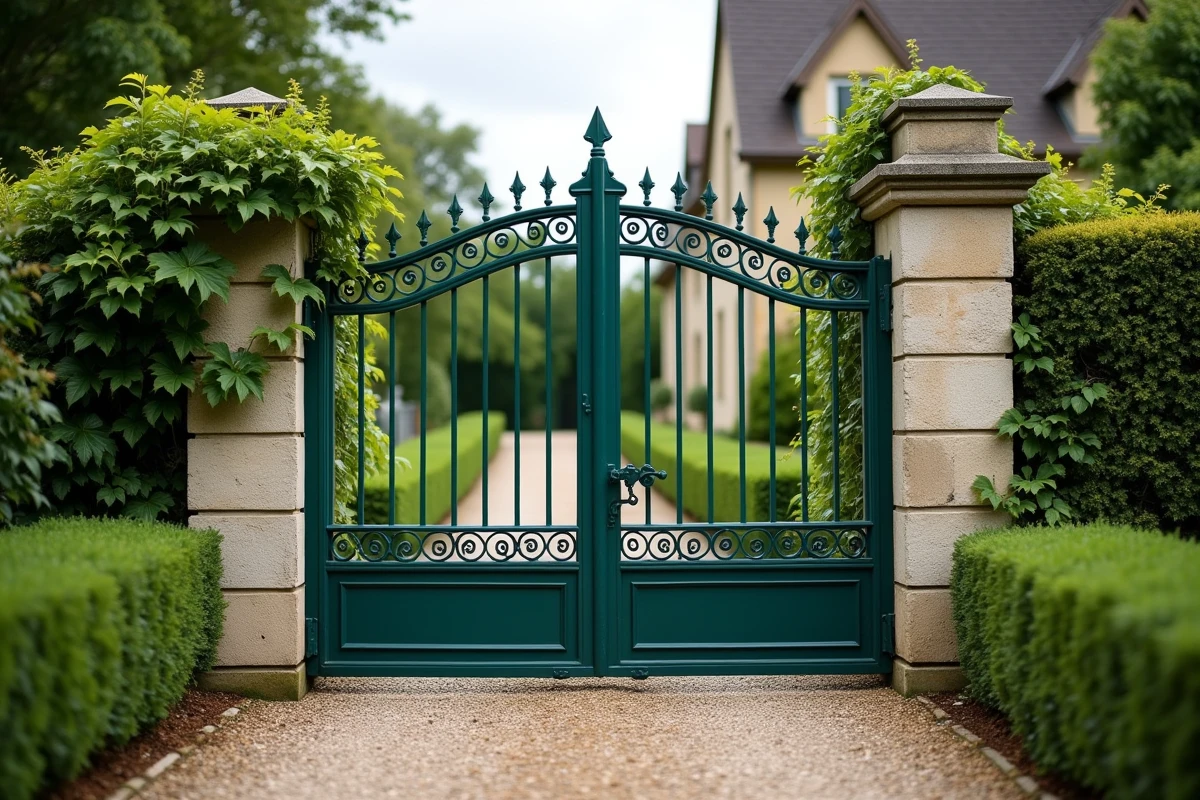
Alternatives like forest green or sepia brown work well in rural or heritage contexts, provided the lacquer certification and the orientation of the gate are checked. The most cost-effective reflex remains to cross three criteria before any order: solar exposure, local regulations, and powder coating label.