A neighbor mowing beyond their property line, a tree planted too close to a vague boundary, a disaster that the insurer refuses to cover due to a lack of visible demarcation: issues related to the absence of boundaries always arise at the worst moment. Delimiting a property without a fence does not mean giving up legal clarity or protecting one’s space. It is a landscaping choice that requires a precise method and some precautions.
Boundary and legal proof: delimiting a property without a fence does not exempt you from anything
Sometimes it is believed that in the absence of a wall or fence, the question of boundaries remains informal. The Civil Code, in articles 646 and following, provides that a neighbor can demand a boundary survey at any time. Without a fence, the physical demarcation of the boundaries becomes the only enforceable physical marker.
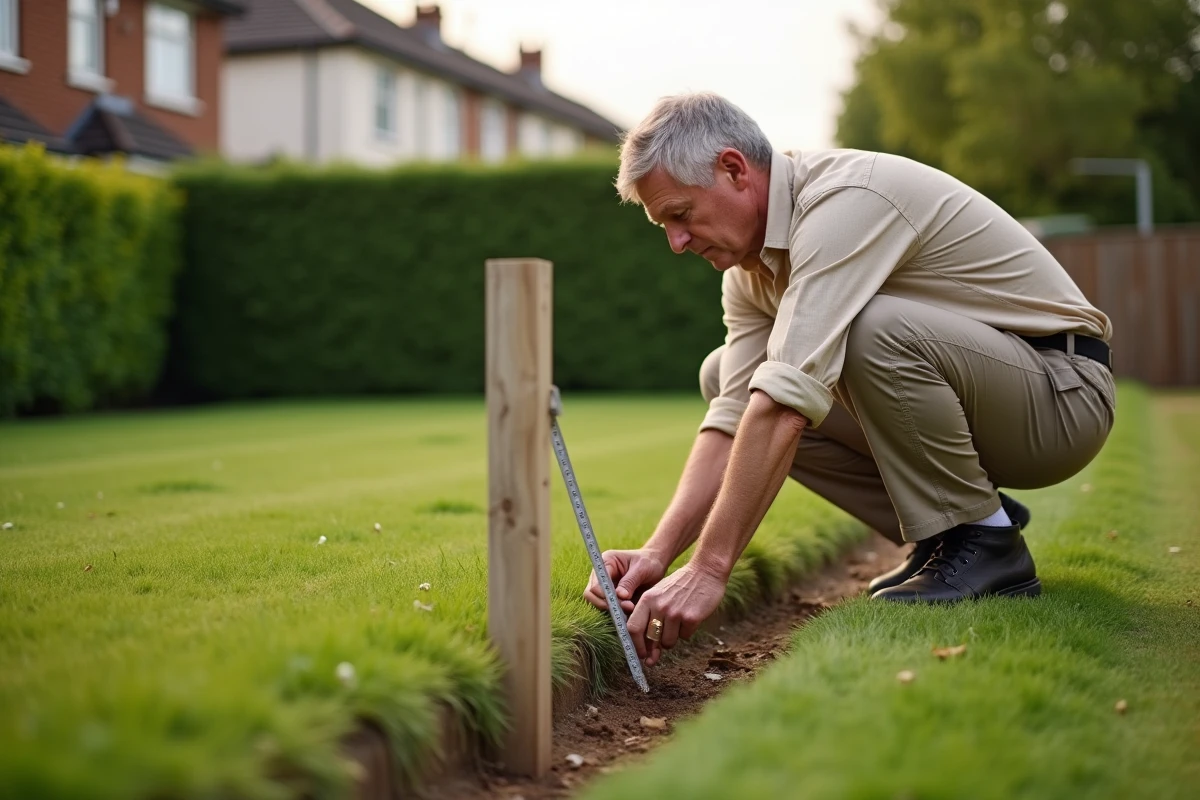
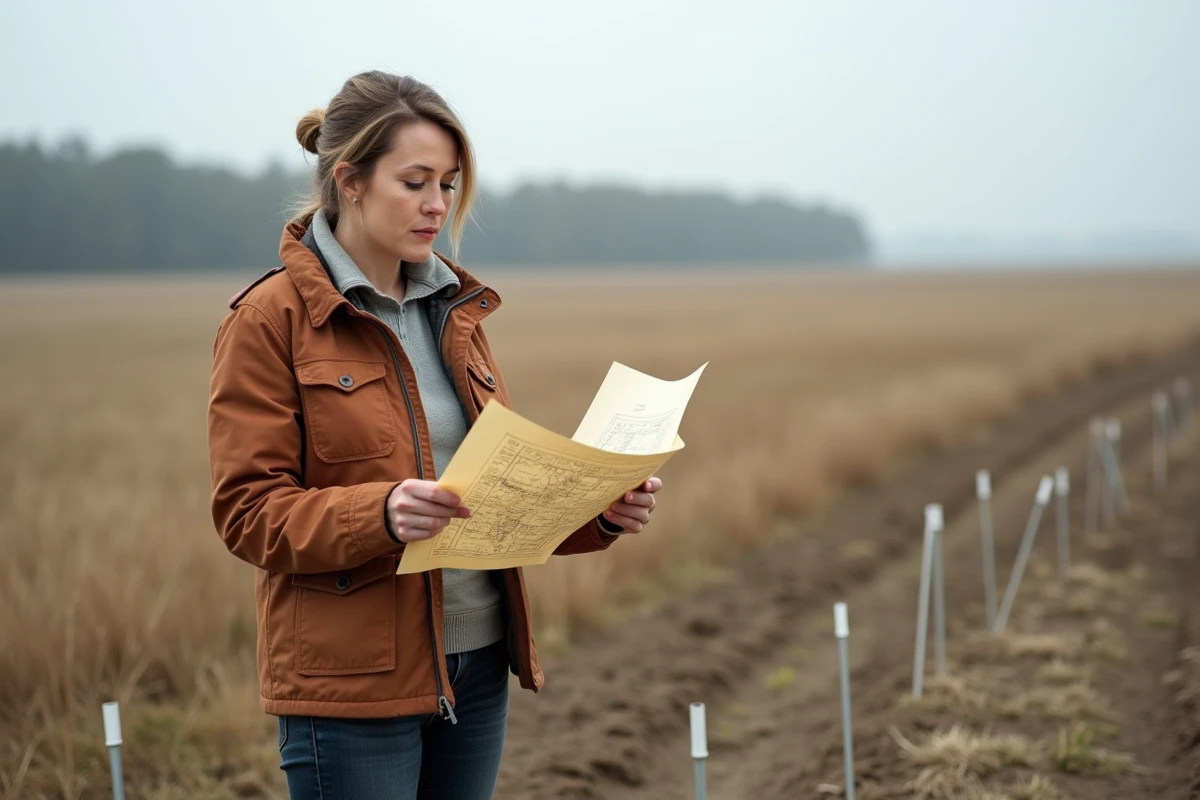
The Higher Council of the Order of Land Surveyors reminds in its practical guides that boundary surveying by a land surveyor remains the only procedure that definitively establishes the limits between two parcels. A simple oral agreement or a stake planted in view does not constitute admissible proof in case of a dispute. The boundary report, signed by both parties, has contractual value.
In practice, you can discover Agri Systems’ tips for choosing visual markers compatible with an official boundary survey. The idea is to combine concrete or stone markers (placed by the surveyor) with plant or mineral markers that remain visible on a daily basis.
If the neighbor refuses amicable boundary surveying, the judicial court can order a judicial boundary survey. The cost is then shared, but the process often drags on for several months. It is better to anticipate by proposing amicable boundary surveying as soon as the land is purchased.
Insurance coverage and unfenced property: what contracts require
Since the revisions of information notices from several major French insurers in 2023-2024, multi-risk home insurance contracts specify a point often overlooked: for theft or damage caused by third parties to apply, there must be a materialized property boundary on the parcel. Markers, low walls, identifiable hedges, or ground markings are sufficient, but a complete lack of demarcation can serve as a reason for denial of compensation.
In practice, the insurer seeks to establish the reality of an intrusion. If nothing delineates the property, proving that a third party has entered your property becomes complicated. We are not necessarily talking about a rigid fence: a low hedge, a row of stones, or posts connected by a rope are sufficient in most cases.
Before choosing a delimitation solution, re-reading the general conditions of your home insurance contract can help avoid unpleasant surprises. Some contracts explicitly mention the term “enclosure,” while others simply refer to “materialized boundary.” The nuance matters at the time of a claim.
Plant solutions for delimiting without a fence: hedge, border, and tree alignment
The hedge remains the most common solution for marking a property boundary without installing a fence or rigid panels. It ensures privacy, aesthetics, and an ecological role that wood or PVC do not fulfill.
Free hedge or trimmed hedge: choose according to available maintenance
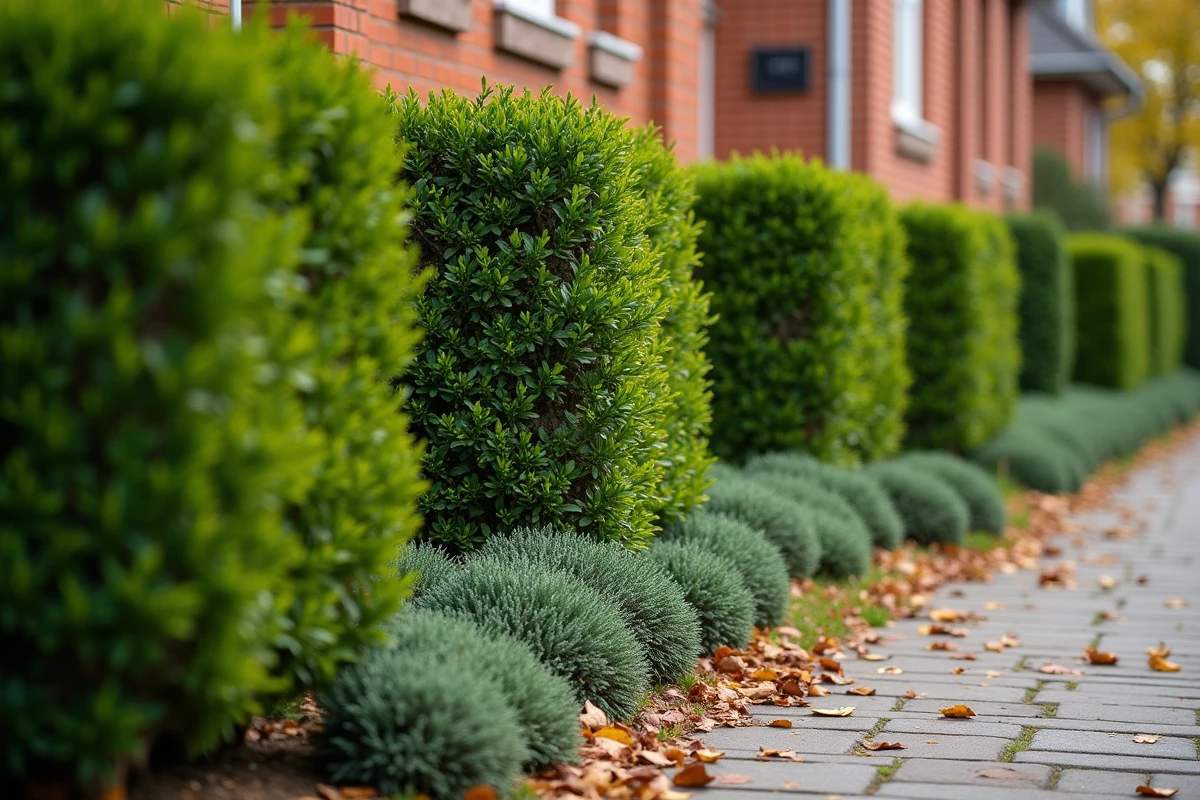
A trimmed hedge (privet, hornbeam, yew) requires two to three trims per year. It offers a clear demarcation and a structured appearance. A free hedge (bloodtwig dogwood, viburnum, elder) grows more naturally, requires less maintenance, but takes up more width.
The mixed hedge combines deciduous and evergreen species to remain visible year-round. This is a point that feedback from homeowners regularly confirms: a hedge composed solely of deciduous species loses its delimitation function in winter, which poses a problem for both neighbors and insurers.
Planting distances and regulations
The Civil Code imposes a minimum planting distance from the separating boundary. For plantings exceeding two meters in height at maturity, the distance is two meters. Below that, half a meter is sufficient. Subdivision regulations or local PLUs may modify these thresholds, so checking with the town hall before planting avoids forced removal later.
- Low hedge (boxwood, lavender, rosemary): discreet delimitation, suitable for small properties, planted 50 cm from the boundary.
- Medium hedge (photinia, laurel, escallonia): a good compromise between screening and bulk, height manageable between one and two meters.
- Tree alignment (field maples, hornbeams): marks a boundary on large rural parcels, planted at a minimum of two meters.
Mineral markings and low borders: sustainable alternatives without plant maintenance
For those who do not want to manage the growth of a hedge, mineral solutions offer a lasting delimitation. A low dry stone wall, a border made of railway sleepers, or a line of pebbles clearly delineates the property without creating the “fortress” effect of a high fence.
A dry stone wall 40 to 60 cm high serves both as a visible boundary and a refuge for biodiversity. Lizards, beneficial insects, and small mammals find shelter there, making it a coherent option for environmentally conscious homeowners.
Wooden posts connected by a simple horizontal rail also work very well in rural areas. They are inexpensive, can be installed without a foundation, and clearly mark the property. Feedback varies on durability depending on the chosen species: chestnut or black locust lasts much better than untreated pine.
Biodiversity and property delimitation: two compatible objectives
Installing a rigid fence or a concrete block wall fragments ecological corridors. Terrestrial animals (hedgehogs, amphibians) become trapped, which gradually impoverishes local wildlife.
Alternatives without fences, such as field hedges, dry stone walls, and low plant borders, maintain ecological continuity while materializing the property boundary. This is a concrete argument against a neighbor who insists on installing a fence: the delimitation is real, the legal proof ensured by the boundary survey, and the property remains permeable to wildlife.
- Prefer local species in hedges: they attract pollinators and require less treatment.
- Leave a low passage (15 cm) under any physical barrier for small mammals.
- Combine stones and vegetation to multiply micro-habitats along the boundary.
Delimiting a property without a fence ultimately requires more thought than simply buying panels from a garden center. An official boundary survey secures the limit, the choice of marking conditions the insurance coverage, and the nature of materials or plantings determines the impact on living things. A well-defined property without a fence protects as much as a fenced property, provided the right markers are placed in the right locations.