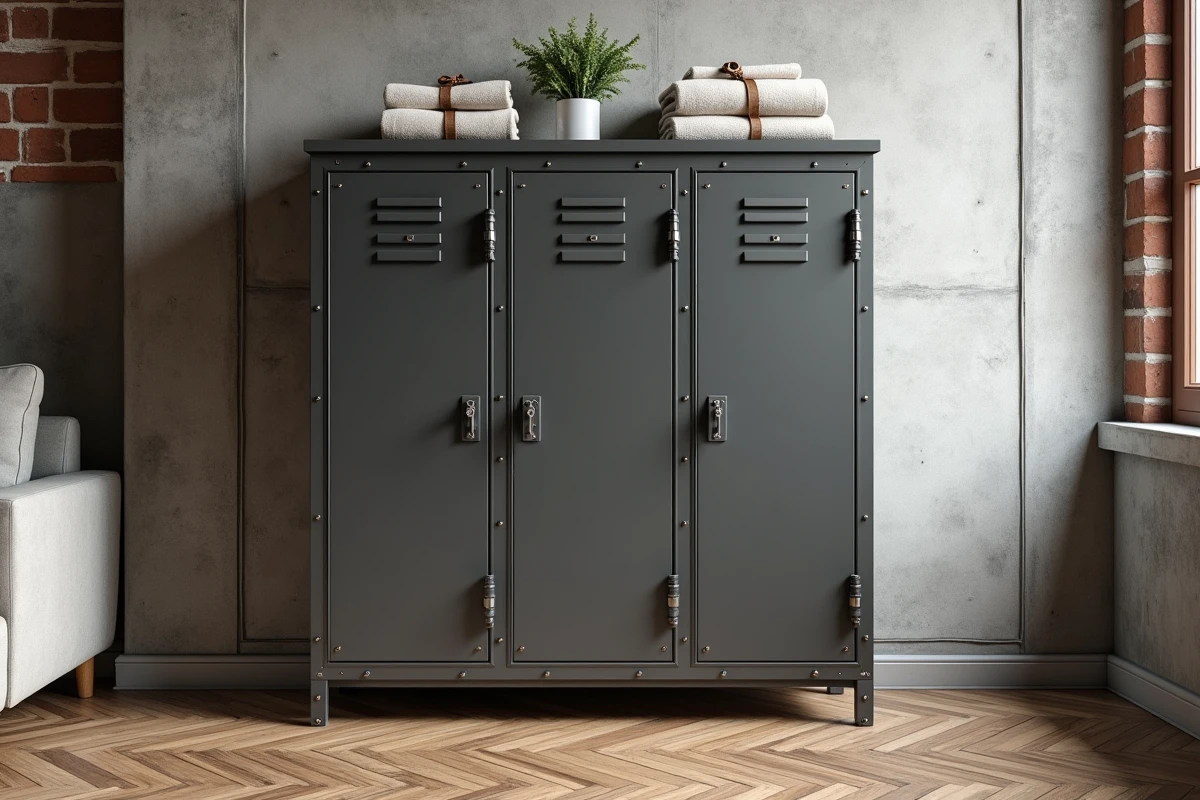
The industrial metal locker is not just a decorative diversion. It is a structuring storage unit, capable of replacing several pieces of furniture in compact living spaces. Its rigidity, modularity in columns, and small footprint make it a technically relevant choice for entrances, open living areas, and studios where every centimeter counts.
Folded sheet metal and magnetic closure: the technical details that change domestic use
The metal lockers intended for residential use are not mere copies of professional models that have been repainted. We observe a clear evolution among manufacturers towards silent magnetic closures replacing key locks or rotary latches. This detail transforms the user experience: a door slamming in a studio entrance is a daily irritant that a magnetic closure eliminates.
The thickness of the sheet metal varies by range. Consumer models go down to thin thicknesses, sufficient for domestic use but inadequate if you plan to load each compartment beyond a few kilos. We recommend checking the load capacity per compartment before purchase, especially for storing heavy shoes or bags.
The hybrid lockers without side panels represent a specific evolution for the residential market. By removing the solid sides, the unit gains visual lightness without losing its structural rigidity (the steel frame and internal shelves are sufficient). In a narrow entrance, this configuration avoids the “block” effect that a piece of furniture closed on three sides would create.
To explore the possible combinations of functionality and aesthetics, the industrial metal locker on Belle Déco details several configurations suitable for contemporary interiors.
Metal locker in the entrance of a small home: replacing three pieces of furniture with one
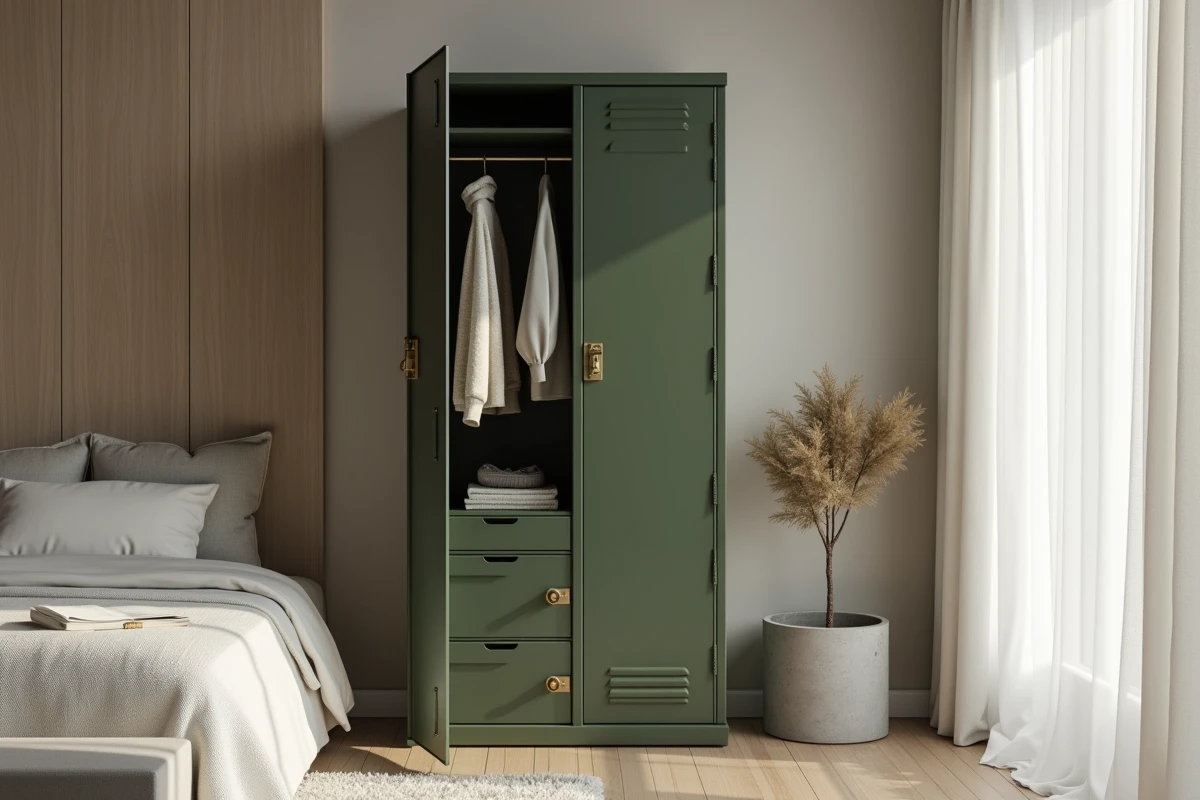
In a T2 or studio, the entrance combines functions: wardrobe, shoe cabinet, console for mail and keys. Aligning three distinct pieces of furniture along a two-meter wall is rarely feasible. A metal locker with four or six compartments, positioned vertically, absorbs these three functions in less than one linear meter.
The top compartment holds hats, scarves, and gloves. The middle compartments hold shoes (two pairs per compartment by alternating heel-to-toe). The lower compartment, more accessible, serves as a catch-all for daily items. This organization is not improvised: it replicates the principle of vertical zoning used in logistics.
The top shelf of the locker, when made of wood (oak or beech depending on the range), replaces the entrance console. Placing a wooden top on a black metal structure corresponds to the warm industrial style that has gradually replaced the raw look of the 2010s. The material contrast works effortlessly without additional decorative effort.
Configuration for a hallway entrance less than 90 cm deep
The classic trap: choosing a locker that is too deep. Professional models often reach 50 cm in depth, designed for hanging work clothes. In residential entry use, a depth of 30 to 40 cm is sufficient and prevents open doors from blocking the passage.
- Measure the width of the hallway with the locker doors open, not closed – this is the most common mistake in small homes
- Prefer doors that open 180 degrees that fold against the side, rather than 90-degree doors that encroach on the passage
- Secure the locker to the wall even if it is freestanding, as the asymmetrical load (an open door with a bag hanging) can destabilize a lightweight piece of furniture
Finishes and metal-wood combinations: what works in an open living space
Installing a metal locker in an open living-kitchen area presents a constraint that the entrance ignores: visible contents generate visual clutter. The current trend towards solid doors with magnetic closures directly addresses this issue. A locker with mesh doors, appealing in photos, constantly exposes the interior mess.
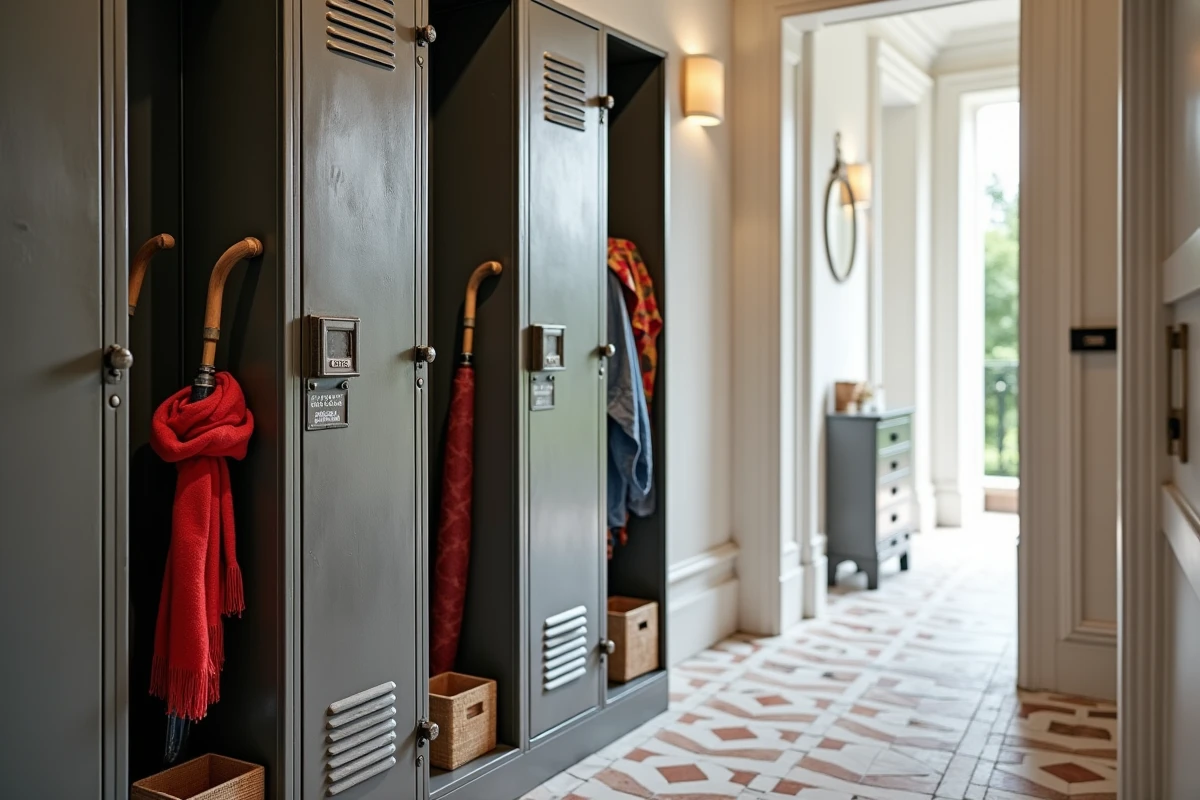
The choice of metal color affects integration. Matte black remains the safest technical choice: it hides micro-scratches, matches most palettes, and ages without yellowing. White, while brighter in small spaces, reveals every impact and fingerprint.
Combining the metal locker with wooden furniture
The combination of black metal and light wood (natural oak, beech) works because it plays on a contrast of material temperatures. Metal brings straight lines and coldness, while wood adds warmth and organic texture. We observe that the most successful configurations limit wood to one or two elements: the top shelf of the locker and possibly a bench placed in front.
- Avoid surrounding the locker with too much wood (shelves, frames, dark flooring) lest you neutralize the contrast that makes the piece interesting
- Thin metal legs elevate the locker and facilitate vacuuming, a practical detail often overlooked
- A locker placed directly on the floor appears bulkier and more anchored, suitable for large rooms but overwhelming in a studio
Metal storage in a studio: limits and trade-offs to know
The metal locker does not replace a wardrobe. Its reduced depth and fixed compartments make it unsuitable for storing folded clothes or bulky linens. In a studio, it complements an open rack or a built-in wardrobe, it does not substitute it.
Acoustics is another rarely discussed point. A metal door, even with a magnetic closure, produces a resonance when closed. In a single space where one sleeps and lives, sticking felt pads inside the uprights eliminates this characteristic metallic noise.
The weight of the empty unit (often several dozen kilos for a four-compartment model) complicates frequent moves. For a tenant on a mobility lease, a wall-mounted metal locker involves drilling holes and restoration upon departure. It is not a nomadic piece of furniture, and it is better to accept this from the outset.